Posts

Showing posts with the label nicky haslam

VT 20.5.13

Image
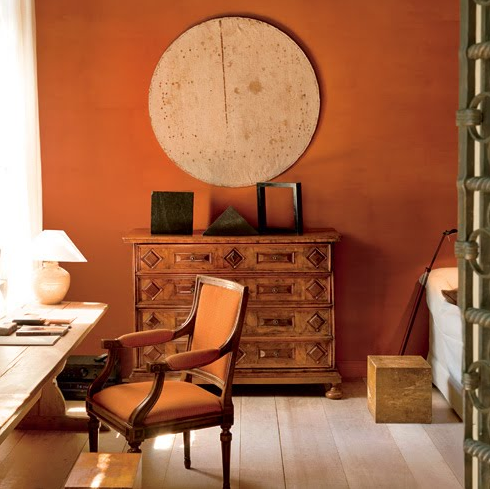
imagecourtesythenewyorktimes There is one style that defines all that taste is really about to me.  It's not over-good, or over-bad, or dull, or elaborate.  It think of it as uncontrived taste, and it is exemplified in the room [pictured above] . . .  One senses that the decorator isn't trying too hard, that the room is simply right; it is not bland or unconsidered, indeed it is romantic and gutsy, as the furniture is huge and not what one would necessarily consider the right furniture for the room; it has warmth and coolness, light and strong shadows, scale and dignity and a dash of carefree color.  One gets an almost imperceptible air of impermanence, yet the scale of furnishings, their presence, anchors the room into our consciousness. Nicky Haslam, The Matter of Taste ( T ), The New York Times

VT 17.5.13

Image
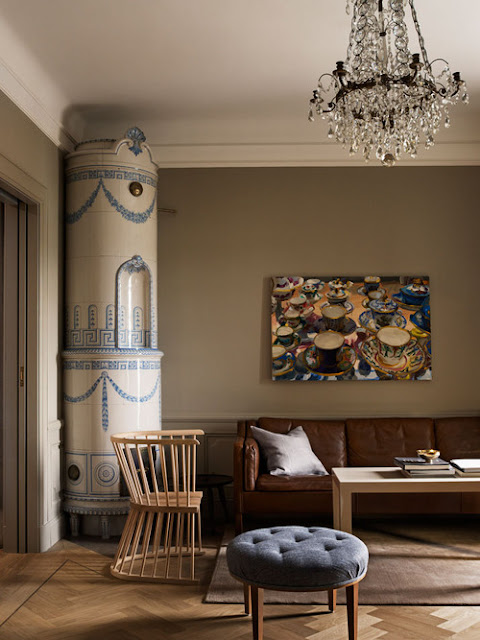
designbetsybrown imagecourtesydesiretoinspireblog Humor, a moment that makes one smile, seems to have vanished from most decoration:  taste has become rigidly uniform--those far-too-long, desperately ungiving sofas, furniture arranged to look good with little thought of its actual use, the spiky "pieces' made by "artists"--probably because designers think too hard and not subjectively about it . . . And as every owner of a new space automatically tears out the decor, even if it is by a master designer, to impinge their own taste on it, impermanence is not at all a bad look or idea.  Indeed, it suggests a life in progress, one in which living is going on, rather than a stiff, sterile layout meant to count as taste for the ages. Nicky Haslam, The Question of Taste ( T ) The New York Times

VT 16.5.13

Image
imagecourtesygiftsoflife.tumblr I'm sure, today, that the interior decoration of Arturo Lopez-Willshaw's yacht, La Gaviota, looks like bad taste to many, but in its just-post-war heyday, the Orientalism and leopard velvet furnishings were as refreshing as Dior's contemporary New Look.  Likewise, after the bad taste bling and glitz of Versailles coming as it did on the heels of the colder, far more austere Renaissance style, the court breathed a sigh of relief at seeing Marie Antoinette's lighthearted and light-giving cottons and gauzes at that purposely tumbledown creation, the Hameau; and her sister Queen Maria Carolina, having fled the mauve marble and silver stucco of Naples, preferred bright, natural colors and sparsely furnished Turko-Gothic interiors for the Chinese Palace in Palermo.  The decor of both these interior schemes was thought to be the height of almost perverse whimsicality; now they may seem affected, but dull they are not.  Taste irons itself ou...

VT 15.5.13

Image
designaxelvervoordt courtesymyparadissiblog For there is a dire lack of oomph in most current interior design, whether ultramodern or traditional, calming or glamorous.  The act--maybe I mean art--of making beautiful, comfortable and unique settings of our own is deeply satisfying.  The scope to be different is so vast, and luckily, one man's mat is another man's cushion. Nicky Haslam, The Question of Taste ( T ), The New York Times

VT 14.5.13

Image
designtriciahuntley courtesyathoughtfuleyeblog And yet, every continent, country, and capital, is awash with bland beige, unrelieved by a lot of lifeless leather, a bit of black and a throw.  And that's not just the new breed of "modern" hotels, but apartments and homes as well, for people seem to want their living spaces to look exactly like the hotel, or spa, or friend's house they just left.  This dullness of "taste" is surely a watered-down version of those coolly elegant rooms that were so eye-catching decades ago.  Think of the Mercer Hotel-ification of style:  those dark brown wenge-wood bookcases are now the sine qua non of ubiquitous, bland modernity.  Even an icon of great taste, like Cy Twombly's house in Rome, has been the object of much dull, middle-of-the-road copycatting.  Nowadays, the tedious sameness of so much modern architecture enhanced by a dash of classicism can only make such taste insipid. Nicky Haslam, The Question of Tas...

VT 13.5.13

Image
photodianekeaton courtesythestylesalonisteblog WHAT IS IT ABOUT TASTE?  A sort of defensive look crosses many people's faces when they hear the word.  If good taste is mentioned, often the reaction of sophisticates is a counterintuitive: "Oh, yuck."  And if bad, it often yields defiant admiration:  "Well, I love a bit of bad taste, actually."  Do they?  Don't they really mean they desire something with guts?  Gusto, after all, in Italian, means taste, gout to the French. Nicky Haslam, The Question of Taste ( T ) The New York Times